Pet Store

Pet news, tips, entertainment and opinions from VetLocator.com

Cocoa mulch and your dog – not a good combination

April 17th, 2010

cocoa_mulch

Spring, gardens, mulch, fresh air, outside with our pets……YUM!   As Julie Andrews sang, “These are a few of my favorite things!”

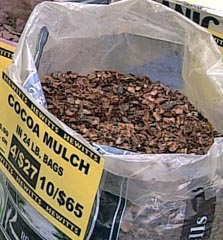
As the urge to be outside in nature gets stronger, and you revel in the sights and sounds of the new life springing forth, be aware of some potential hazards that can harm your dog if you are not careful.  One of them is cocoa mulch – a product that has grown in popularity over the past several years because it looks great and smells delicious, just like cocoa.

Many dogs think so too, and there have been several occurrences of dogs getting ill and even dying after ingesting cocoa mulch.

Here is an excerpt on cocoa mulch from About.com:

Analysis: No question about it, chocolate and other products made from cacao beans — e.g., cocoa mulch — contain substances toxic to certain animals, including both dogs and cats. And the main culprit is indeed theobromine, a caffeine-like chemical which acts as a mild diuretic and stimulant in human beings but is poisonous to animals less well equipped to metabolize it.

Cocoa mulch, which consists mainly of cacao bean shells, contains a higher concentration of theobromine than chocolate processed for human consumption. Dogs are attracted to the scent and in documented cases have eaten the stuff, leading to vomiting, diarrhea, trembling, seizures and, in rare instances, death. While it’s equally toxic to cats, veterinarians say they are less likely to ingest cocoa products and therefore less at risk.

If you suspect your dog may have eaten cocoa mulch, the ASPCA recommends contacting your veterinarian immediately or calling the Animal Poison Control Center at 1-888-426-4435 for expert advice.

Symptoms of Theobromine toxicity may include:

  • vomiting & diarrhea
  • trembling, acting nervous
  • seizures, muscle spasms
  • excessive thirst
  • unconsciousness
  • death – although this is rare

Most dog owners know not to give their dog or cat chocolate because they can die from it.  Now you know about cocoa mulch and to keep an eye on your dog when you are out and about with him or her.

Keeping our pets safe is something we take seriously 🙂

Linda
Daily Paws
VetLocator.com

Reblog this post [with Zemanta]

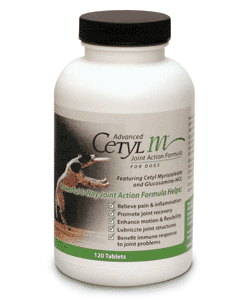
Recall Alert! Response Products recalls Cetyl M Joint Action Formula for Dogs

April 17th, 2010

Cetyl M Dog

The FDA issued a recall alert for Response Products Cetyl M Joint Action Formula for Dogs because of possible Salmonella contamination. This is a voluntary recall by the company as a precaution only. No adverse effects have been reported thus far.

Below is the FDA’s official recall.
—————–

FOR IMMEDIATE RELEASE – April 12, 2010 – Response Products, Broken Bow, NE is voluntarily recalling Cetyl M for Dogs, lot numbers 1210903 and 0128010, due to a possible Salmonella contamination from the hydrolyzed vegetable protein component provided by Basic Foods of Las Vegas, NV. Tests conducted by Basic Foods to detect Salmonella produced negative results; however, Response Products has determined to recall the above-referenced lots.

People who handle dry pet food and/or treats can become infected with Salmonella, especially if they have not thoroughly washed their hands after having contact with the chews or any surfaces exposed to these products. Healthy people infected with Salmonella should monitor themselves for some or all of the following symptoms: nausea, vomiting, diarrhea or bloody diarrhea, abdominal cramping and fever. Rarely, Salmonella can result in more serious ailments, including arterial infections, endocarditis, arthritis, muscle pain, eye irritation, and urinary tract symptoms. Consumers exhibiting these signs after having contact with this product should contact their healthcare providers.

Pets with Salmonella infections may be lethargic and have diarrhea or bloody diarrhea, fever, and vomiting. Some pets will have only decreased appetite, fever and abdominal pain. Infected but otherwise healthy pets can be carriers and infect other animals or humans. If your pet has consumed the recalled product and has these symptoms, please contact your veterinarian.

Cetyl M for Dogs was distributed nation-wide through direct sales, retail stores, veterinarians and online retailers.

The above-referenced lots of Cetyl M for Dogs were distributed in either a 120-count bottle (shipped between January 8, 2010 and April 2, 2010) or a 360-count bottle (shipped between February 11, 2010 and April 2, 2010). The affected lot numbers are as follows: #1210903 and 0128010. The lot number can be found directly above the bar code on the label. These lots were sent out in the time periods as set out above. This product is in tablet-form, is approximately the size of a dime and is light brown in coloring.

To date, Response Products has received no reports of illness associated with the use of this product. Response Products recently learned that the FDA and Basic Foods of Las Vegas, NV, the producer of one of the components of the affected product’s vegetable beef flavoring, hydrolyzed vegetable protein, had detected Salmonella in Basic Food’s facility and had issued a recall on said component. The manufacturer of the vegetable beef flavoring used in Cetyl M for Dogs, tested the hydrolyzed vegetable beef protein for Salmonella and the results were negative. However, due to the concern regarding Salmonella in Basic Foods’ facility, it decided to recall two lots (only one lot affected our product) of said vegetable beef flavoring. The finished product manufacturer of Cetyl M for Dogs had tests performed on both the raw materials used to make our product and also the finished product, and all tested negative for Salmonella, however, it has issued a voluntary recall on two lots (see lot numbers listed above) of Cetyl M for Dogs.

Response Products requires that testing for Salmonella and other harmful pathogens is completed during the manufacturing process. Even though the testing performed at each level of the process showed negative results for Salmonella, in an effort to produce the highest quality product for our customers, Response Products ceased distributing the dog product in the above-referenced lots and is issuing a voluntary recall on its Cetyl M for Dogs in the affected lot numbers. In addition to the testing listed above, Response Products sent samples from said lots, as well as from lot produced after those lots, to an independent laboratory, and all samples received a negative result for Salmonella.

Response Products continues to investigate the cause of the problem and continues to be committed to producing a high-quality, effective product for dogs.

Consumers who have purchased the listed lots of Cetyl M for Dogs are urged to contact Response Products or the place of purchase for further direction. Consumers may contact Response Products at 1-877-266-9757, Monday through Friday, from 8:00 am to 5:00 pm CST.

Reblog this post [with Zemanta]

Scratch-Scratch-Scratch…Uh Oh…. FLEAS!

April 11th, 2010

My dog has fleas

My dog has fleas

Scratch scratch scratch….you see your pet scratching and immediately think “Uh oh…FLEAS!”

And chances are you’re right.

Recently there has been a lot of news and focus on fleas and ticks,  and there’s a lot in the news about the EPA getting involved in issuing guidelines and pulling products off the markets, leaving pet owners more confused than ever.

This article from the Veterinary Information Network titled “Lawsuits proliferate against makers of topical flea and tick products” is a must read for better understanding of what is happening and also looks at one of the victims who later filed a lawsuit against one of the flea and tick treatment manufacturers.

Lawsuits proliferate against makers of topical flea and tick products” (article opens in a new window)

So here’s some common sense advice and your options.

Flea and tick treatments basically break down into two major types:

#1 – Natural repellents which include oils, sprays, wipes, shampoos and collars.   While these normally won’t cause an adverse effect in your pets, they must be reapplied frequently – usually at a minimum of once a day if your pet goes outside, and they aren’t always effective in all cases.

#2 – Chemical repellents which includes prescription medication from your vet and online pharmacies and over-the-counter (i.e. those you can buy from the local grocery or pet store) treatments.  These are chemicals that are applied via one-spot treatments or sprays, shampoos, collars, powder, etc.

The one spots are the subject of the new EPA guidelines.  They are popular because they can effectively prevent a bad flea infestation on your pet through 1x a month application.  However, they can cause severe reactions and even death in some animals – as the VIN article mentions.

If you’ve elected to go with a natural repellent be prepared to do more to keep the fleas and ticks at bay.  One good suggestion is to treat your yard for fleas and ticks once or twice a season to keep the fleas out of your yard using something non-toxic like nematodes or other natural repellents. That way your pets aren’t picking up fleas when they go out into the yard.

We’ve had good success using a natural product using Cedar Oil.  The yard treatment keeps not only the fleas and ticks away but also cuts down on mosquitoes and other biters.  Then we spray our dogs in the morning before they go out and things work out well for everyone.

So, no matter which way you choose to go, getting the upper hand against fleas quickly, before they get out of hand, is a good policy to keep you and your pets happy and comfortable in this worse than normal flea season.
linda-sig


Cat behavior problems? Study reveals who the real boss is

March 29th, 2010

badcatsm As I sit here writing this article, my ear is attuned to a certain sound that, when I hear it, always causes me to drop what I’m doing and go do something else.

Oh, I’ve tried to resist that sound and I’ve actually managed to hold out for at most a minute before I may an excuse to myself and I get up in response.

You may be wondering what that sound is?

It’s the call of the White Cat.

And there’s a good reason why the call of the white cat has the effect it does on me.  There is science behind my response.  And if you’ve ever had a similar thing happen to you be glad to know we can’t help it.

There’s a certain type of urgent-sounding, high-pitched meow, and some cats can make this sound when they want to be fed.

The white cat is one of them and it’s a cry that he has worked on and developed over time, I’m sure.

The study shows that we humans find this particular cry annoying and difficult to ignore and I can attest that this study is right.

Here’s an excerpt from an article on the study which was conducted by Karen McComb of the University of Sussex:

Cats know us

Previous research has shown similarities between cat cries and human infant cries.

McComb suggests that the purr-cry may subtly take advantage of humans’ sensitivity to cries they associate with nurturing offspring. Also, including the cry within the purr could make the sound “less harmonic and thus more difficult to habituate to,” she said.

McComb got the idea for the study from her experience with her own cat, who would consistently wake her up in the mornings with a very insistent purr. After speaking with other cat owners, she learned that some of their cats also made the same type of call. As a scientist who studies vocal communication in mammals, she decided to investigate the manipulative meow.

Tough to test

Setting up the experiments wasn’t easy. While the felines used purr-cries around their familiar owners, they were not eager to make the same cries in front of strangers. So McComb and her team trained cat owners to record their pets’ cries — capturing the sounds made by cats when they were seeking food and when they were not. In all, the team collected recordings from 10 different cats.

The researchers then played the cries back for 50 human participants, not all of whom owned cats. They found that humans, even if they had never had a cat themselves, judged the purrs recorded while cats were actively seeking food — the purrs with an embedded, high-pitched cry — as more urgent and less pleasant than those made in other contexts.

When the team re-synthesised the recorded purrs to remove the embedded cry, leaving all else unchanged, the human subjects’ urgency ratings for those calls decreased significantly. “

Cat behavior problems are a common complaint with people that are owned by them.  Our office cats started out being complained about frequently but  I’ve been pretty successful in getting them somewhat trained to be part of the office  (this after having several ‘accidents’ here that good behavior could have fixed).

My advice to owners looking for help?

There are some good eBooks out on cat behavior problems that really can help in many situations and when those don’t work I usually recommend contacting a trainer..and if that does not work?

Well, then you sit there waiting for a certain sound…………….

linda-sig

VetLocator.com’s Daily Paws
VetLocator – where you can find
the right professional and the
right advice for your pet

Evangers Pet Food’s shocking theft

March 28th, 2010

evangers

When business loses focus on producing a great product and, instead on cheating ways to get money that’s just bad.

And once started it’s common to hear about the original cheat (in cheating situations someone will usually talk) and then subsequent stories about more cheating begin to surface.

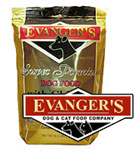
And that’s the situation with Evangers, the disgraced Natural pet food company that was ordered to stop shipping product last year by the FDA because of violations in how they processed their natural pet food.  In the FDA situation several pet owners reported their pets becoming very ill after eating Evangers’ pet food.

Now comes more Evangers news, but this time they are accused of stealing utilities….
to the tune of MILLIONS of dollars.

I read the following story in amazement at the audacity of the company.  First at how they went about doing it and second that they thought no one would report it.

It’s a pretty outrageous theft on a huge scale and it is being reported by several news outlets:

(story excerpt from the Chicago Sun Times story by RUMMANA HUSSAIN Criminal Courts Reporter)
“The husband and wife owners of a premium dog and cat food company that was once featured on the Food Network swiped natural gas service and electric power in an elaborate scheme that left Nicor and ComEd $1.7 million in the hole, Cook County prosecutors said today.

Joel and Holly Sher toyed with their gas meter to prevent it from recording how much gas they actually used and also constructed a separate underground pipe to divert the flow of gas before it reached the meter at their Wheeling-based Evanger’s Dog & Cat Food Company, Assistant State’s Attorney Robert Podlasek said.

To cover their tracks, the Lincolnwood couple allegedly inserted a two-way valve so the gas flow could be re-directed when Nicor officials performed inspections.

The Shers also illegally hooked up high voltage wiring to ComEd power lines and connected it to their manufacturing plant’s electrical supply system, Podlasek said.

Often, the couple would enlist their employees to help with the scam, supplying them with a tool to help rollback gas meters, Podlasek said.

One worker said Joel Sher directed him to use a jackhammer to dig through concrete and asphalt to divert the gas line, Podlasek said.

That same worker said Joel Sher asked him to ride up on a forklift to remove illegal wires and fuses prior to a ComEd inspection, according to the complaint.”

The utilities companies estimate that they’ve lost approximately 1.8 million dollars worth of natural gas and electricity.  State attorney investigators have seized 2.3 million from the couple in recent days as part of the probe.

The rest of the story is worth reading too, (especially the part about a judge letting the Shers leave the state to attend a trade show) and you can read it here.
linda-sig

Linda Ferguson
Editor
Daily Paws
PS.  If you have pet dietary questions
check our directories for pet nutritionists.

Miracle dog that conquered a brain tumor passes

March 23rd, 2010

batman

In October of last year I shared the story of Batman, a dog owned by Anna Brailovsky and her husband Eric Baker  in the story titled

Dog cancer miracle – and what it can mean to us“.

Batman had been a happy healthy dog until 2008 when he began to suffer seizures.  When his owners brought him in to see why, it turned out Batman had a tumor in his brain causing the seizures.  He was treated and his treatment at the University of Minnesota was an experimental one – and one that turned out to be a success, not only for Batman – who successfully beat the cancer, but the procedure he received may be used to help humans as well.

And although Batman was only given a prognosis of 10 months to live after the successful operation, he stayed with his family for another year and a half, cancer free.  In the end it was pneumonia that he was not able to beat.

University of Minnesota researcher John Ohlfest called the dog, “a champion for science, but an inspiration for all dogs and humans alike.”

We agree.

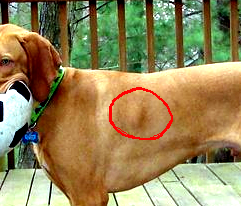
What should you do when your pet has a lump?

March 19th, 2010

One common question we get from pet owners on our Ask A Pet Pro blog is:

“My dog has a lump, a bump, a cyst, a fatty tumor….

Should I be worried? ”
lump

While these things are not uncommon, especially in older pets, they should always be checked out.

Recently we received a newsletter from the University of Illinois College of Veterinary Medicine that addressed this question for dogs:

“Maybe it’s just a tiny mass on Fido’s chest, or a new bump on Fluffy’s neck. It may look harmless, but mast cell tumors can look like anything. Even a lipoma, a benign fatty tumor many older dogs get, can easily be misdiagnosed without further testing.

Dr. Alison Book is an oncology resident at the University of Illinois Veterinary Teaching Hospital in Urbana. She says, “mast cell tumors can have a wide range of behavior and prognoses in the dog.” They also have varying appearances and can mimic other tumors. Similar to lipomas, they may feel soft and moveable; alternatively they can be firm, red or inflamed lesions. In short, you can’t judge a tumor by its cover.

It is for this reason that Dr. Book recommends that your veterinarian aspirate any bump found on your dog that looks suspicious. An aspirate is simple to perform and not very stressful to the patient either. A veterinarian gently sticks a small gauge needle into the mass and fenestrates (small movements) or aspirates (pulls back on the syringe) to pull out cells within the mass. With this aspirate, experts can review the cells under a microscope.”

Does your dog have a bump or lump?  Do yourself and your pet a favor and have it checked out soon.  If it’s nothing to worry about that’s good to know but if it is something that needs to be addressed, you will have increased the chances for a positive outcome for your pet by finding out sooner rather than later.

And if you should need help finding a local vet, VetLocator.com has many available for you to search.

To your pet’s good health,
Linda

Nature’s Variety Pet Food Expands RECALL

March 11th, 2010
Nature's Variety Expands Recall

Nature's Variety Expands Recall

Nature’s Variety has expanded its voluntary recall of all Chicken Formula and Organic Chicken Formula products with a “Best If Used By” date on or before 2/5/11.

Nature’s Variety has received new test results from an outside facility that indicate that its Chicken Formula Raw Frozen Diet, issued under the ”Best If Used By” dates of 10/29/10 and 11/9/10, may be contaminated with Salmonella.

The company — out of an “abundance of caution,” it says — is also expanding the recall to include all Chicken Formula and Organic Chicken Formula Raw Frozen Diets for dogs and cats with any “Best If Used By” date on or before 2/5/11.

The products included in the expanded recall are:

UPC#7 69949 60130 2 – Chicken Formula 3 lb medallions
UPC#7 69949 60120 3 – Chicken Formula 6 lb patties
UPC#7 69949 60121 0 – Chicken Formula 2 lb single chubs
UPC#7 69949 50121 3 – Chicken Formula 12 lb retail display case of chubs
UPC#7 69949 60137 1 – Organic Chicken Formula 3 lb medallions
UPC#7 69949 60127 2 – Organic Chicken Formula 6 lb patties
The “Best If Used By” date is located on the back of the package above the safe handling instructions.

If you have purchased one of the affected products, you may return the unopened product to your local retail store to receive a complete refund, or exchange it for another variety. If your package has been opened, dispose of the raw food in a safe manner by securing it in a covered trash receptacle. Then, bring your receipt (or the empty package in a sealed bag) to your local retailer for a complete refund or replacement.

Source:  USA Today http://content.usatoday.com/communities/ondeadline/post/2010/03/pet-food-recall-expanded/1

Nature’s Variety has expanded its voluntary recall of all Chicken Formula and Organic Chicken Formula products with a “Best If Used By” date on or before 2/5/11.

Nature’s Variety has received new test results from an outside facility that indicate that its Chicken Formula Raw Frozen Diet, issued under the ”Best If Used By” dates of 10/29/10 and 11/9/10, may be contaminated with Salmonella.

The company — out of an “abundance of caution,” it says — is also expanding the recall to include all Chicken Formula and Organic Chicken Formula Raw Frozen Diets for dogs and cats with any “Best If Used By” date on or before 2/5/11.

The products included in the expanded recall are:

UPC#7 69949 60130 2 – Chicken Formula 3 lb medallions
UPC#7 69949 60120 3 – Chicken Formula 6 lb patties
UPC#7 69949 60121 0 – Chicken Formula 2 lb single chubs
UPC#7 69949 50121 3 – Chicken Formula 12 lb retail display case of chubs
UPC#7 69949 60137 1 – Organic Chicken Formula 3 lb medallions
UPC#7 69949 60127 2 – Organic Chicken Formula 6 lb patties
The “Best If Used By” date is located on the back of the package above the safe handling instructions.

If you have purchased one of the affected products, you may return the unopened product to your local retail store to receive a complete refund, or exchange it for another variety. If your package has been opened, dispose of the raw food in a safe manner by securing it in a covered trash receptacle. Then, bring your receipt (or the empty package in a sealed bag) to your local retailer for a complete refund or replacement.

Source:  USA Today http://content.usatoday.com/communities/ondeadline/post/2010/03/pet-food-recall-expanded/1

Tales of the Unusual: Cool and Unusual Animal Stories

March 3rd, 2010
Linda

Linda

During the course of my week, I do a lot of research and see a lot of pet news. Often I’ll come across something cool or something weird or something unusual that I’d like to share with you but they’re really not enough for a Daily Paws feature.

I’ve decided to gather them up and share them in our Daily Paws Tales of the Unusual: Cool and unusual animal stories to share.

I have three stories for you today.

1. Veterinarian fetches sheriff’s horse from hayloft – this is both cool and unusual.

Tales From Nebraska VEterinarians & Families

Tales From Nebraska Veterinarians & Families

How DID the sheriff’s horse make it up a set of narrow stairs to the hayloft?

This is a story from a book titled “‘Tales of Tails from Nebraska Veterinarians & Families” and I know you’ll enjoy reading this very funny story.  And if you like the story, buy the book.  All proceeds from the sale of the book go to Nebraska veterinary students for scholarships.

You can read the Veterinarian and the horse in the hayloft story HERE.


2. Dog hitches a ride 1200 miles from his home to join his owner in New Orleans:

Charlie and Steve

Charlie and Steve

I’ve read stories of animals traveling great distances to return home.

This is not that story.  It is a pretty cool story of a dog who’s master traveled 1200 miles away and how the dog wound up there too.

You can read that story HERE


3. Pet snake saves family from house fire:

Snake Saves Family

Snake Saves Family

We’ve all seen stories like this, stories of dogs or cats and even birds that have saved their family from disaster, but a pet snake?

First of all, in this story the snake is loose and roaming around the house.  Second of all, he does things I’ve never heard of a snake doing before.

Is the story true?  I don’t know…and you can make up your mind after reading it yourself.

Click HERE to read the snake story.


—————-

Enjoy our first issue of Daily Paws Tales of the Unusual and if YOU come across a tale that you think fits, please send it to me for inclusion in an upcoming issue.
Linda
VetLocator.com

Listen to your mom’s advice and brush those teeth every day!

February 17th, 2010
February is pet dental month

February is pet dental health month

I’m about to repeat something that your mom probably told you many times when you were growing up and it has to do with brushing teeth. But this time the advice is for your pets.

Do you brush your pet’s teeth daily?

If you’re like most pet owners, the answer is a definite NO.

You may be thinking, “My pet would never let me near his/her teeth let alone sit still while I BRUSH them” or “My life is so hectic I can barely get my own teeth brushed, let alone the cat’s.”

Most pet owners never even look in their pet’s mouths, let alone brushing their teeth.

However, being aware of the condition of your pet’s teeth and in keeping them in good shape is just as important to their health as it is to yours.

And it just so happens that February is pet dental health month, a great time to learn more on what you can do to help your pet keep his/her teeth clean.

Having your pet’s teeth checked during it’s semi-annual wellness check is normally part of your vets routine. During this check your veterinarian can help you determine your pet’s oral health state.

Periodontal disease is very common in dogs and cats and depending on its severity, it can cause varying degrees of halitosis, tartar or plaque, gingivitis and/or tooth disease depending on age and breed.

Here are step-by-step instructions (see the video below from Howzini) on how to brush your dog’s teeth:

1. Put pet-safe toothpaste on your finger and allow the dog to lick some of it off (pet toothpaste comes in flavors such as chicken).
2. Start with just 1 tooth.  Put toothpaste on the toothbrush and rub in a little toothpaste where the tooth meets the gum line.
3. Do not brush your dog’s teeth like you brush your own teeth. Instead, just smear the toothpaste on your dog’s tooth — 1 tooth at a time.  Dog toothpaste is made to dissolve the plaque without much rubbing or scrubbing.
4. If the first tooth went well, then try the same thing on another tooth. Until your dog gets used to this process, you may need to do only a few teeth at a time — in one sitting.

Cats can sometimes be a little trickier than dogs, and here is a video that shows a cat getting her teeth cleaned:

Here are some things you can do besides brushing to help keep your pet’s teeth clean:

  • Get a professional dental cleaning to start. A routine teeth cleaning is very similar to the cleaning you receive from your hygienist.
  • Provide dental treats and chews to help slow the development of tartar.
  • Use veterinary approved toothpaste when you brush your pet’s teeth. Human toothpaste or baking soda can cause an upset stomach.

And just like in humans, if your pet has significant tooth or periodontal disease present, not only is his health and comfort at risk, but additional care may be necessary including tooth extractions, treatment for infections, growths and tumors.

To maintain good health, your pet needs a healthy mouth. Daily brushing can help and you can contact your veterinarian for recommendations on how you can prevent and/or treat dental disease in your pet.

As always, if you are looking for veterinary care, VetLocator.com has local vets that are available to provide the help that you need and if you can’t find what you are looking for, just shoot our Customer Care staff an email and we’ll be glad to help you out!

Here’s to great teeth for both you and your pets,
linda-sig

www.vetlocator.com